
Compliance
What Apparel Certificate Readiness Really Means
A practical guide to apparel certificate readiness, testing reports, quality evidence, supplier documents, and why fabric claims must match the actual order scope.
Quick answer
Apparel certificate readiness means a buyer and factory understand which documents are needed, which supplier or material they apply to, what claim they support, and whether the document matches the actual product and order scope.
Testing reports, material documents, audit files, and compliance records should not be used as decoration. They should answer a specific buyer question about fabric, production, quality, sourcing, or claim support.
A responsible clothing manufacturer should explain document boundaries clearly instead of promising generic certificates for every product.
Separate testing reports, certificates, and supplier documents
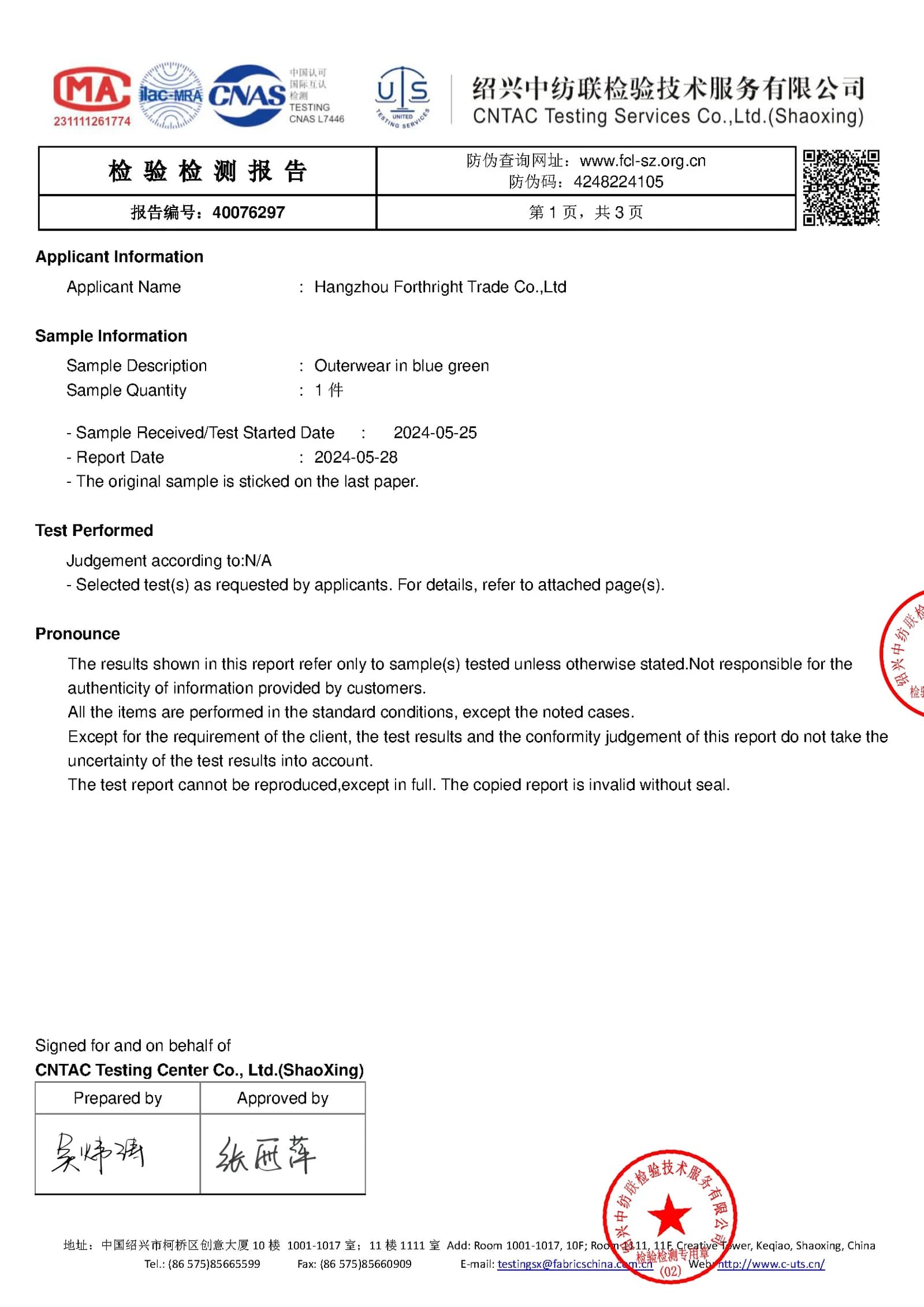
Testing reports usually apply to a sample, fabric, or material test. They may include fiber content, color fastness, formaldehyde, shrinkage, water resistance, or other project-level checks.
Supplier certificates or material documents can apply to a supplier, material batch, facility, or certification scope. They should be checked by date, issuing body, product relevance, and buyer claim.
Factory audit files are different again. They may support buyer onboarding or social compliance review, but they do not automatically prove material claims.
Testing reports are quality evidence for specific sample or material checks. They should not be described as broad certifications.
Match every claim to fabric and order scope
Recycled, organic, waterproof, color fastness, fiber content, and chemical safety claims should be reviewed against the actual fabric, supplier source, test method, and shipment scope.
A report from one material does not automatically support a different fabric, color, coating, supplier, or production batch.
For buyers, this matters because unsupported claims can create marketplace, retailer, customs, or consumer trust problems after launch.
Prepare document requests before fabric confirmation
Document conversations should start before fabric is locked. Once a buyer chooses fabric, color, trims, and order quantity, the available document options may already be limited.
Buyers should explain destination market, retailer or platform requirements, product claims, material direction, and whether documents are needed for onboarding, label claims, or internal sourcing records.
A clear document request lets the factory check supplier availability instead of making promises that may not match the selected material.
How Coverenta handles certificate readiness
Coverenta reviews document requests by project scope, product category, material selection, supplier source, claim language, testing need, and buyer destination market.
Testing records and quality reports are treated as evidence connected to the project, not decorative badges. Social compliance and material document requests are handled through qualified buyer communication.
This approach keeps document conversations grounded in real sourcing and production decisions.
Author
Coverenta Editorial Team
Apparel Manufacturing Editors
The Coverenta editorial team documents practical apparel manufacturing decisions for brand buyers, sourcing teams, and product developers.
FAQ
Questions this article answers.
What does certificate readiness mean in apparel sourcing?
Certificate readiness means the factory can review buyer document needs, material source, supplier documents, testing reports, audit files, and claim scope before production or shipment.
Are testing reports the same as certifications?
No. Testing reports are project-level quality evidence for a sample or material. Certifications or supplier documents have their own scope, dates, issuing bodies, and product relevance.
When should buyers request apparel compliance documents?
Buyers should request document review before confirming fabric, trims, labels, and product claims because document availability depends on the supplier source and selected material.
Can every fabric support recycled or organic claims?
No. Claim support depends on the selected material, supplier source, certification scope, batch, order quantity, and destination market requirements.
Related Posts
Continue reading.
Quality Control Questions To Ask Before Bulk Production
A factory-floor checklist for apparel quality control before bulk production, including fabric inspection, fit approval, inline checks, measurement control, AQL review, and packout.
Read ArticleFabric Inspection Before Cutting: Why Apparel Buyers Should Ask
A factory-floor guide to fabric inspection before cutting, why it separates stronger apparel manufacturers from weaker ones, and what buyers should ask before production starts.
Read ArticleHow to Start a Private Label Outdoor Jacket Brand
A practical manufacturing guide for building a private label outdoor jacket line, from product positioning and fabric sourcing to samples, testing records, MOQ planning, and export-ready packing.
Read Article